The Disaster Module is a decision support system that enables the monitoring and management of critical data in map-based formats during disasters such as earthquakes, floods, and fires, and coordinates response processes.
The Disaster Module is a decision support system that enables the monitoring and management of critical data in map-based formats during disasters such as earthquakes, floods, and fires, and coordinates response processes.
The Disaster Module is a comprehensive system that supports crisis management by bringing together vital information such as assembly areas, risk zones, damage assessments, critical facilities, infrastructure status, and disaster response resources on a single platform.
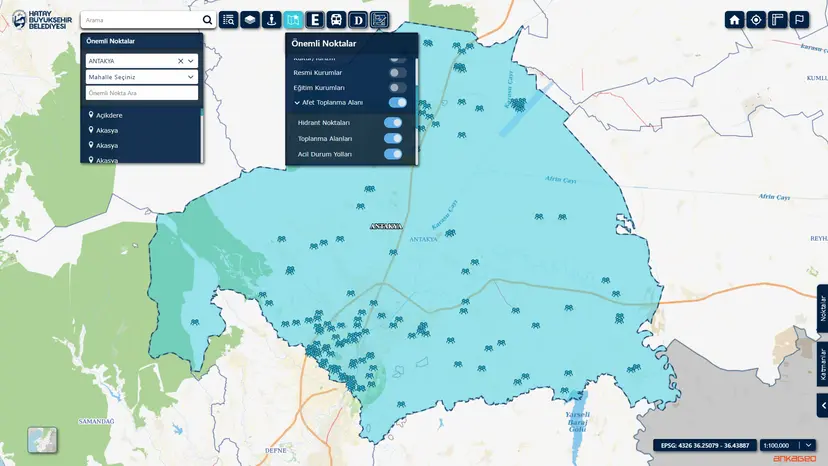
The module is designed for use throughout the entire process, from pre-disaster preparedness to disaster operations, and offers the following capabilities:
Mapping and analyzing risky areas, building stocks, and critical infrastructure.
Managing assembly areas, shelters, and evacuation routes.
Coordination of field teams and resources during a disaster.
Real-time collection of damage assessment data from the field and its visualization on a map.
Producing reports and situation analyses regarding the intervention process.
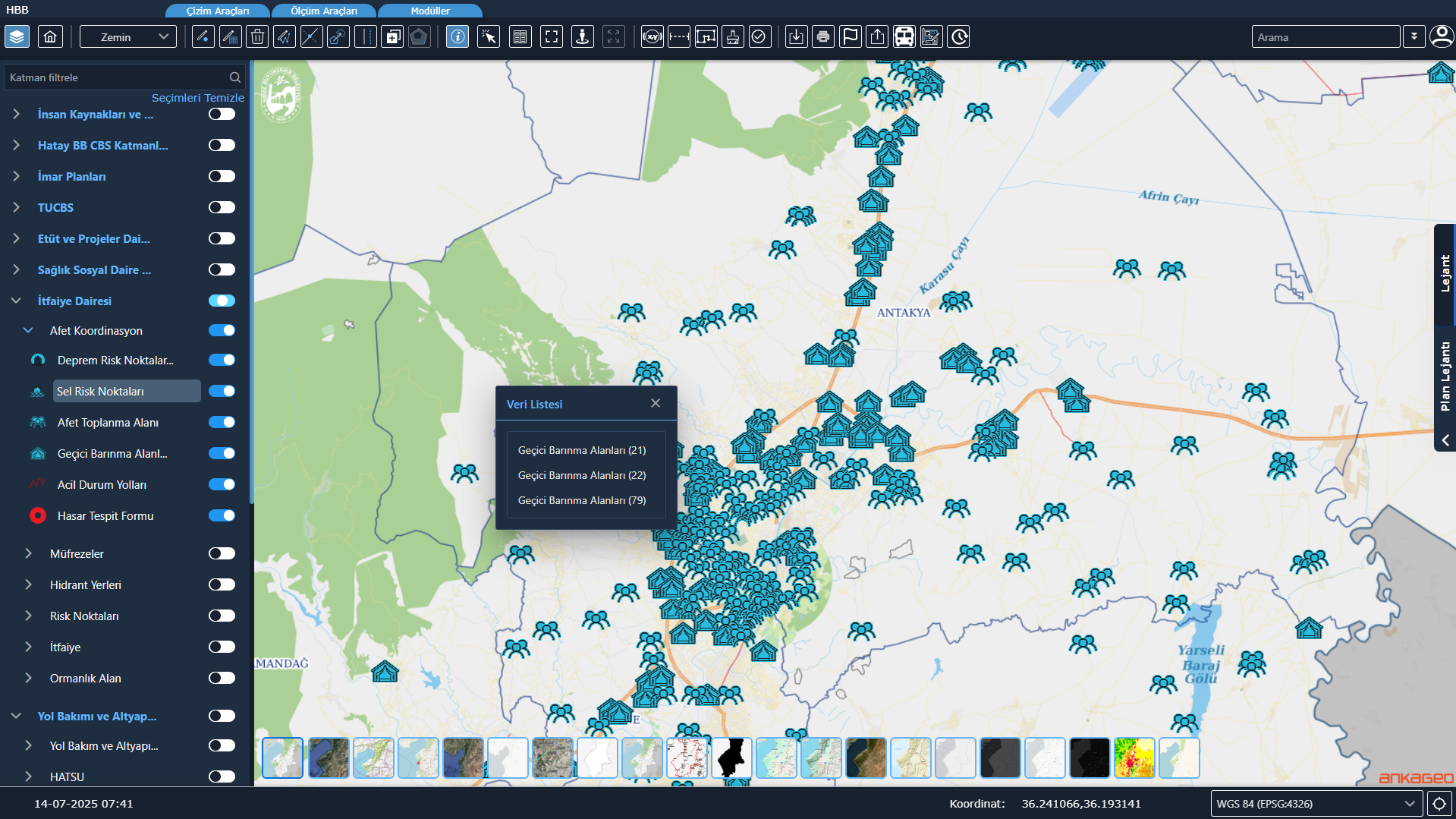
This structure strengthens municipalities’ disaster preparedness, enables rapid decision-making during crises, and contributes to more effective response processes.
It is a decision support system that enables monitoring and management of critical data in map-based formats during disasters such as earthquakes, floods and fires, and coordinates response processes.
It unifies vital information such as assembly areas, risk zones, damage assessments, critical facilities, infrastructure status and disaster response resources.
Mapping and analyzing risky areas and building stocks; managing assembly areas, shelters and evacuation routes; coordinating field teams; real-time damage assessment collection and producing situation reports.
It strengthens disaster preparedness, enables rapid decision-making during crises and allows response processes to be carried out more effectively.